- Need Diagnostic Guidance? Call Desk: +971 55 639 9463
- Expert Support: 8:00 AM – 10:00 PM (GST)


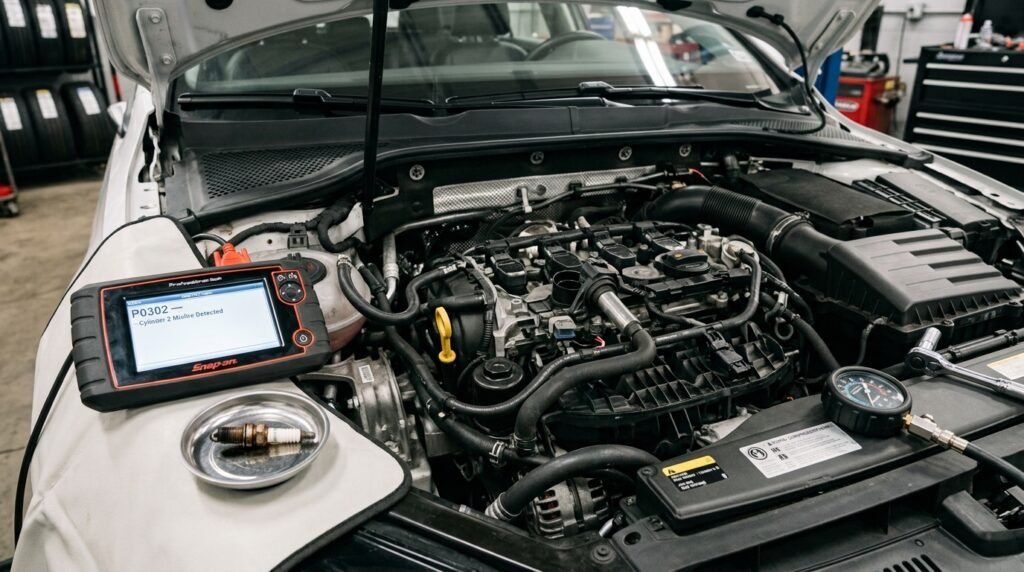
Every modern gasoline engine requires three fundamental physical conditions to run smoothly: an exact air-fuel ratio, a synchronized high-voltage spark, and adequate mechanical cylinder compression. When any cylinder fails to complete a clean combustion stroke, the crankshaft decelerates momentarily, the engine computer logs a misfire (P0300–P0308), and raw fuel gets forced into the exhaust stream.
Before spending hundreds of dollars shotgunning new sensors or ignition parts, follow this structured diagnostic sequence to isolate the exact mechanical, fuel, or ignition fault.
If your vehicle's Check Engine Light begins flashing rapidly on the dashboard while driving, reduce speed and pull over immediately. A flashing light indicates a hard misfire dumping unburned liquid fuel directly into the catalytic converter. Under exhaust temperatures, this fuel ignites inside the converter matrix, melting the ceramic core into a solid lump within 5 to 10 minutes and turning an affordable repair into a major expense.
When troubleshooting engine performance issues, avoid random part replacements by following the mechanical elimination order:
Engine Fault Detected → 1. Spark Check → Ignition Coils & Plug Gap → 2. Air/Fuel Mix → Vacuum Leaks & Injector Pulse → 3. Compression → Piston Rings & Valve Sealing
Ignition Spark Loss: Usually causes an immediate, sharp jerk under heavy engine acceleration or wet weather.
Fuel Delivery Issues: Lean fuel trims cause hesitation at high RPMs, rough cold starts, and stumbling during sudden throttle input.
Vacuum / Air Leaks: Extra unmetered air entering behind the Mass Air Flow (MAF) sensor causes erratic idle hunting that smooths out once you drive at higher RPMs.
Mechanical Compression Loss: Causes a consistent dead misfire at all engine speeds, paired with excessive crankcase blow-by.
Before picking up a ratchet, running your active trouble codes through the DriveSolve Car Diagnostic Navigator will analyze your vehicle’s specific make and model against known Technical Service Bulletins (TSBs) and fuel trim thresholds.
Step 1: Isolate Ignition Faults with the Cylinder Coil-Swap Test
If your scan tool logs a specific cylinder misfire code (such as P0302 for Cylinder 2):
1. Number the ignition coils with paint or tape.
2. Swap the suspected ignition coil from Cylinder 2 to Cylinder 1, leaving the spark plugs in place.
3. Clear the trouble code and test-drive the vehicle until the light reappears:
The Code Moves to P0301: The ignition coil has suffered internal dielectric breakdown and must be replaced.
The Code Stays on P0302: The coil is good; the fault lies downstream in the spark plug, fuel injector, or cylinder mechanical compression.
Step 2: Inspect Spark Plug Electrodes & Ceramic Shells
Remove the spark plug from the misfiring cylinder and examine the tip:
Black Velvety Carbon: Rich fuel mixture, leaking injector, or weak ignition voltage.
Wet Raw Fuel: Complete spark failure (dead coil or open circuit).
Ash / White Blistering: Severe engine overheating or lean combustion.
Ceramic Carbon Tracking: Look closely for thin black lightning lines down the white porcelain insulator. Carbon tracking creates an electrical short to the engine head, bleeding off spark energy before it reaches the combustion chamber.
Step 3: Smoke Test the Intake Manifold for Unmetered Vacuum Leaks
Unmetered air entering through split PCV hoses, dry-rotted intake boots, or cracked intake manifold gaskets dilutes the air-fuel mixture, triggering lean codes (P0171/P0174) and rough idling.
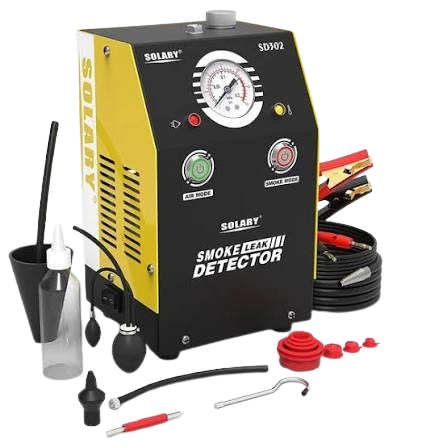
Connect an Automotive EVAP Vacuum Smoke Machine Leak Detector to the engine’s main vacuum port or intake snorkel with the engine off:
Direct pressurized diagnostic smoke into the induction tract at 1 to 2 PSI.
Use a high-intensity inspection light to watch the intake runner seams, injector O-rings, and throttle body gaskets.
Any emerging white smoke pinpointed in seconds marks the exact leak source without messy chemical sprays.
Step 4: Execute a Cylinder Compression & Leakdown Test
If spark and air-fuel delivery test within spec but a cylinder continues to misfire, the engine cannot generate adequate combustion pressure.
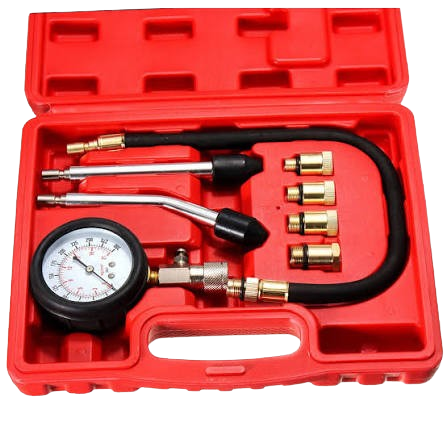
Thread an Engine Cylinder Compression Tester Kit into the spark plug port and crank the engine over 5 to 6 compression strokes with the fuel pump relay removed:
Healthy Engine Benchmark: 150 to 190 PSI per cylinder across modern multi-valve engines.
The 10% Balance Rule: The lowest cylinder must read within 10% of the highest cylinder.
Low Reading on Two Adjacent Cylinders: Indicates a blown head gasket fire ring between combustion chambers.
Zero Compression: Points to a bent intake/exhaust valve, snapped timing chain/belt, or a holed piston.
To isolate complex engine performance faults accurately without replacing functional components, keep these three top-selling diagnostic tools in your workshop:
| Essential Diagnostic Tool | Primary Function | Ideal For |
|---|---|---|
| Engine Cylinder Compression Tester Kit | High-pressure dual-scale gauge with multi-thread spark plug adapters (M10–M18) and quick-release valves. | Testing internal cylinder mechanical health, identifying worn piston rings, and verifying valve seating integrity. |
| Automotive EVAP Vacuum Smoke Machine Leak Detector | Generates safe, dense mineral vapor under regulated low pressure with built-in air pump and pressure gauge. | Finding invisible vacuum line leaks, intake manifold gasket cracks, PCV splits, and EVAP emissions leaks. |
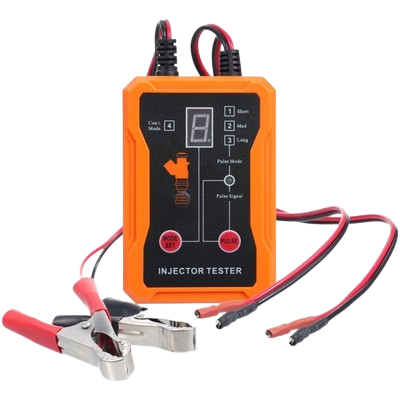
| Fuel Injector Cleaner and Pulse Tester Kit | Multi-pulse signal generator and pressurized ultrasonic solvent flush adapters for gasoline/GDI injectors. | Testing spray patterns, clearing clogged micro-baskets, and verifying electrical coil resistance. |
Engine drivability problems frequently trigger secondary electrical, charging, or cooling faults. Continue through our diagnostic network to close your troubleshooting loop:
Stop guessing which sensor, coil, or mechanical part is causing your engine to hesitate. Input your vehicle’s year, make, model, and active diagnostic symptoms into the DriveSolve Car Diagnostic Navigator to get an immediate component failure probability breakdown, factory technical bulletins, and exact DIY repair paths in seconds.